Fountains of Youth – Classic trout flies that have withstood the test of time … flies that remain “forever young”
by Rusty Dunn
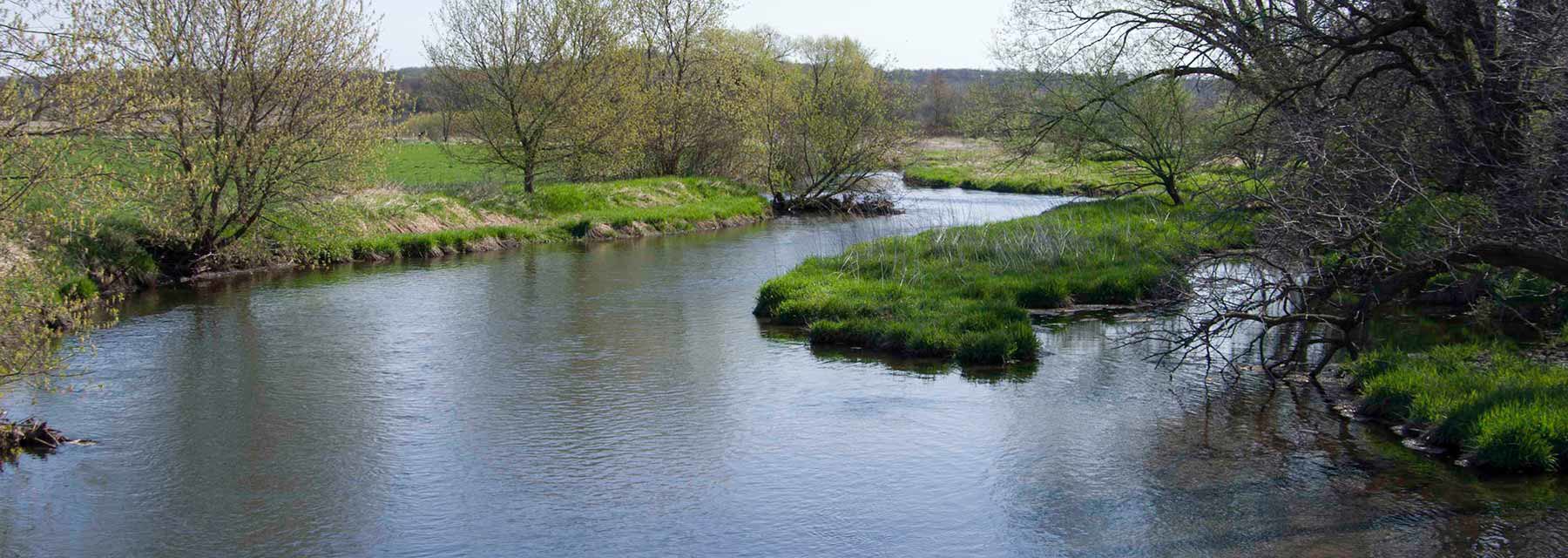
Spring creeks are the crown jewels of fly fishing. The common feature of all spring creeks is that the bulk of their flows originates from natural springs or artesian aquifers. Dissolved minerals, slight alkalinity, stable flows, and consistently cold temperatures promote year-round growth of aquatic plants, insects, and crustaceans. The food base and, hence, trout biomass of spring creeks are very high compared to equivalently sized freestone streams, whose flows originate primarily from melting snow and/or precipitation runoff. Examples of world-class spring creeks include Silver Creek and the Henry’s Fork in Idaho, Armstrong and DePuy Spring Creeks in Montana, Penns Creek, Spring Creek, and Letort Spring Run in Pennsylvania, and the fabled chalk streams of southern England (River Test, River Itchen, River Avon, etc.).
Tailwater fisheries are similar to spring creeks in many ways, but usually on a much grander scale. Tailwaters are river flows just downstream of dams built for water management and/or hydroelectric power generation. The column of water in such reservoirs (often hundreds of feet deep) stratifies into relatively stable zones of varying temperatures and dissolved nutrients. Most dams release their water from deep outlets, thereby providing consistent downstream flows of cold nutrient-rich water. Examples of world-class tailwater fisheries include New Mexico’s San Juan River below Navajo Dam, Montana’s Bighorn River below Yellowtail Dam, Missouri’s White River below Bull Shoals Dam, Utah’s Green River below Flaming Gorge Dam, and Colorado’s South Platte River below each of a series of seven dams. Tailwaters can hold thousands or even tens of thousands of trout per mile.
Many of the country’s most famous trout fisheries are spring creeks or tailwaters. Their crystal clear waters, glassy smooth flows, heavy weed growth, prolific but shockingly tiny insects, and highly selective trout make such waters challenging for most fly anglers but immensely rewarding for an experienced few. Spring creeks and tailwaters are fisheries that make anglers famous, and vice versa. They are the major leagues of fly angling. The laboratories where patterns and methods to fool even the pickiest of trout are developed. The crucibles that identify truly outstanding trout flies.
The RS2 is one such fly. It was created for Colorado’s South Platte River by Rim Chung, a modest and humble Korean who fled with his family from North to South Korea in the 1950s during the Korean War and immigrated to Denver, CO in 1968 at age 34. Chung had fished most of his life, but he knew little about fly fishing or trout when arriving in Colorado. He began fishing with spinning gear, but fortuitous friendships and mentors steered him toward fly fishing and tying. He was a quick study and developed his now-legendary RS2 pattern in the early 1970s. Chung primarily fished the South Platte River, where he studied its local insects and behaviors of its famously large and selective trout during hatches. He then designed simple but effective flies to match the hatches. Chung’s first design, the RS1, was a more-or-less standard nymphal imitation, but his second design, the RS2, proved to be a remarkably effective imitation of emerging midges and small mayflies. The “RS” of RS2 stands for “Rim’s Semblance”, because his fly-tying goals were always to suggest but not closely replicate the appearance of natural insects. The silhouette of the RS2 is thin, delicate, and sparse, just like the South Platte naturals. The RS2 is tied of soft feathery materials that quiver when wet and suggest lifelike movements.
The key element that distinguished Chung’s RS2 from earlier South Platte flies is a small tuft of soft, fuzzy, feather barbs to imitate adult wings just as they begin to sprout from the molting nymphal (or pupal in the case of midges) body. Thus, the RS2 is an early-stage mayfly and midge emerger, one that is exceedingly effective. Fish it awash in the surface film if trout feed atop the surface, or a few inches underneath if bulging trout feed on nymphs or pupae just below the surface. The RS2 is an excellent dropper when trailed behind and beneath an indicator dry fly. Small jerky movements of the RS2 imparted by the angler can excite to a frenzy even the most cautious of trout and most subdued of angler.
Copyright 2025, Rusty Dunn
Rim Chung’s RS2

Rim Chung’s favorite RS2 colors are shades of black, gray, olive, tan, and yellow to match natural insects.
|
Hook:
|
Dry fly, straight eye, #14 – #24
|
|
Thread:
|
8/0-14/0, color to match naturals
|
|
Tail:
|
Two medium or dark dun microfibetts, split, length ~1x to 1.5x the hook shank
|
|
Abdomen:
|
Natural or dyed beaver dubbing
|
|
Thorax:
|
Natural or dyed beaver dubbing
|
|
Wing:
|
A clump of dun or gray, downy, fluffy, feather barbs taken from the base of a hen saddle feather, trimmed to a small stub. (Many tyers use CDC puffs instead.)
|


Rim Chung’s RS2
Leave a Comment
Last Updated: June 27, 2025 by Drew Kasel
by Rusty Dunn
Spring creeks are the crown jewels of fly fishing. The common feature of all spring creeks is that the bulk of their flows originates from natural springs or artesian aquifers. Dissolved minerals, slight alkalinity, stable flows, and consistently cold temperatures promote year-round growth of aquatic plants, insects, and crustaceans. The food base and, hence, trout biomass of spring creeks are very high compared to equivalently sized freestone streams, whose flows originate primarily from melting snow and/or precipitation runoff. Examples of world-class spring creeks include Silver Creek and the Henry’s Fork in Idaho, Armstrong and DePuy Spring Creeks in Montana, Penns Creek, Spring Creek, and Letort Spring Run in Pennsylvania, and the fabled chalk streams of southern England (River Test, River Itchen, River Avon, etc.).
Tailwater fisheries are similar to spring creeks in many ways, but usually on a much grander scale. Tailwaters are river flows just downstream of dams built for water management and/or hydroelectric power generation. The column of water in such reservoirs (often hundreds of feet deep) stratifies into relatively stable zones of varying temperatures and dissolved nutrients. Most dams release their water from deep outlets, thereby providing consistent downstream flows of cold nutrient-rich water. Examples of world-class tailwater fisheries include New Mexico’s San Juan River below Navajo Dam, Montana’s Bighorn River below Yellowtail Dam, Missouri’s White River below Bull Shoals Dam, Utah’s Green River below Flaming Gorge Dam, and Colorado’s South Platte River below each of a series of seven dams. Tailwaters can hold thousands or even tens of thousands of trout per mile.
Many of the country’s most famous trout fisheries are spring creeks or tailwaters. Their crystal clear waters, glassy smooth flows, heavy weed growth, prolific but shockingly tiny insects, and highly selective trout make such waters challenging for most fly anglers but immensely rewarding for an experienced few. Spring creeks and tailwaters are fisheries that make anglers famous, and vice versa. They are the major leagues of fly angling. The laboratories where patterns and methods to fool even the pickiest of trout are developed. The crucibles that identify truly outstanding trout flies.
The RS2 is one such fly. It was created for Colorado’s South Platte River by Rim Chung, a modest and humble Korean who fled with his family from North to South Korea in the 1950s during the Korean War and immigrated to Denver, CO in 1968 at age 34. Chung had fished most of his life, but he knew little about fly fishing or trout when arriving in Colorado. He began fishing with spinning gear, but fortuitous friendships and mentors steered him toward fly fishing and tying. He was a quick study and developed his now-legendary RS2 pattern in the early 1970s. Chung primarily fished the South Platte River, where he studied its local insects and behaviors of its famously large and selective trout during hatches. He then designed simple but effective flies to match the hatches. Chung’s first design, the RS1, was a more-or-less standard nymphal imitation, but his second design, the RS2, proved to be a remarkably effective imitation of emerging midges and small mayflies. The “RS” of RS2 stands for “Rim’s Semblance”, because his fly-tying goals were always to suggest but not closely replicate the appearance of natural insects. The silhouette of the RS2 is thin, delicate, and sparse, just like the South Platte naturals. The RS2 is tied of soft feathery materials that quiver when wet and suggest lifelike movements.
The key element that distinguished Chung’s RS2 from earlier South Platte flies is a small tuft of soft, fuzzy, feather barbs to imitate adult wings just as they begin to sprout from the molting nymphal (or pupal in the case of midges) body. Thus, the RS2 is an early-stage mayfly and midge emerger, one that is exceedingly effective. Fish it awash in the surface film if trout feed atop the surface, or a few inches underneath if bulging trout feed on nymphs or pupae just below the surface. The RS2 is an excellent dropper when trailed behind and beneath an indicator dry fly. Small jerky movements of the RS2 imparted by the angler can excite to a frenzy even the most cautious of trout and most subdued of angler.
Copyright 2025, Rusty Dunn
Rim Chung’s RS2
Rim Chung’s favorite RS2 colors are shades of black, gray, olive, tan, and yellow to match natural insects.
Hook:
Dry fly, straight eye, #14 – #24
Thread:
8/0-14/0, color to match naturals
Tail:
Two medium or dark dun microfibetts, split, length ~1x to 1.5x the hook shank
Abdomen:
Natural or dyed beaver dubbing
Thorax:
Natural or dyed beaver dubbing
Wing:
A clump of dun or gray, downy, fluffy, feather barbs taken from the base of a hen saddle feather, trimmed to a small stub. (Many tyers use CDC puffs instead.)
Share this:
Category: Fly Tying, Rusty Dunn Fountains of Youth
Recent Posts
Categories