Fountains of Youth – Classic trout flies that have withstood the test of time … flies that remain “forever young”
by Rusty Dunn
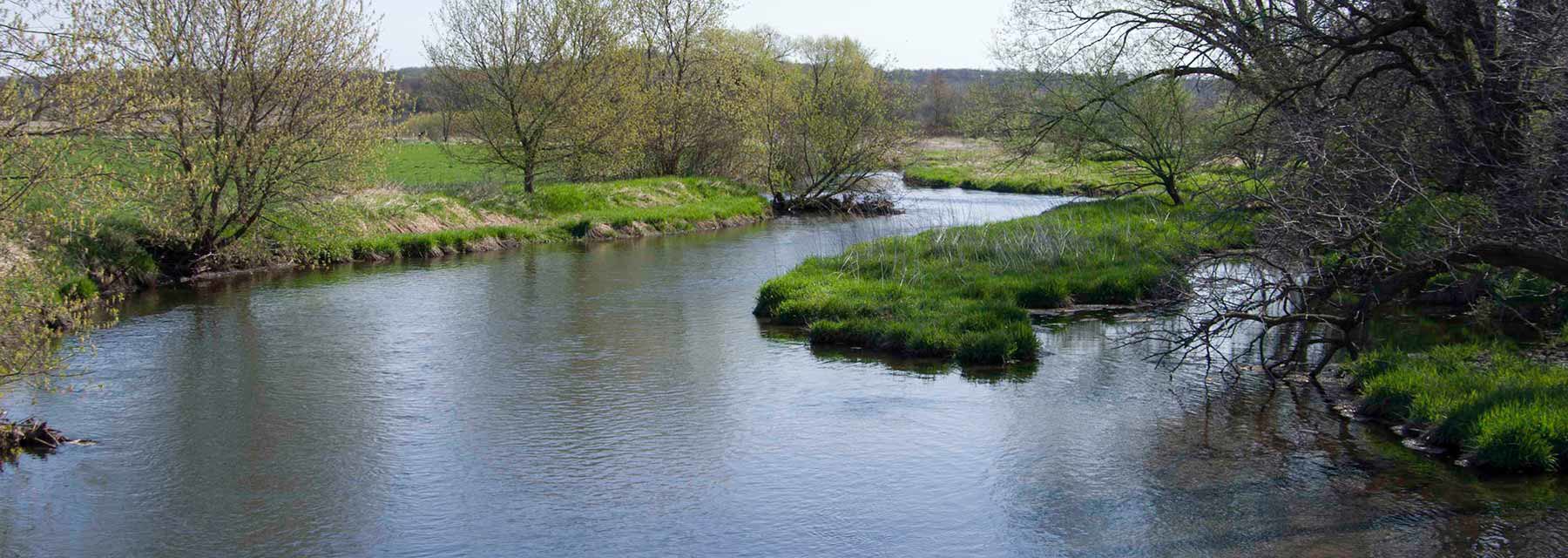
Ojibwe natives called the river Wiisaakode-ziibi (“river through half-burnt woods”) due to the many forest fires that scarred its valley. The Ojibwe traveled in birch bark canoes, carrying furs and other goods upstream from Lake Superior, across headwater bogs, and down the St. Croix River to the Mississippi basin. French fur traders translated Wiisaakode-ziibi as Bois Brulé (“burnt wood”) River, which remains the name today. Most Wisconsinites, however, simply know it as “The Brule”. When the great north woods beckon Wisconsin anglers, the Brule is often their destination.
The Brule once held 10 pound brook trout, but the ravages of 19th century logging forced such trout back to Lake Superior. The river slowly recovered, however, and by the 1920s became a haven for summer retreats of wealthy Midwesterners and power brokers of the Eastern establishment. Stately homes and luxury accommodations prospered among the Brule’s isolation and unspoiled natural beauty. Well-heeled anglers, including at least five US presidents, fished its cold clear waters. In the words of Wisconsin author Gordon MacQuarrie, “The Brule, edged with cedar and spruce, is your artist-fisherman conception of the way a trout stream ought to look.”
The Brule is Wisconsin’s most famous river and was home water of Sid Gordon, arguably Wisconsin’s most famous fly angler. Gordon (1885-1956) worked during the 1930s for the Wisconsin Conservation Department (predecessor of today’s DNR) supervising lake and stream improvement in northern Wisconsin. He designed and built hundreds of stream improvement structures on the Brule. Gordon was a nationally known expert on water chemistry, water quality, aquatic vegetation, and how those factors affect insect and fish populations. He developed a remarkably accurate method for calculating a river’s carrying capacity (pounds of fish per acre foot) solely from its chemical analysis.
After leaving the Conservation Department, Gordon was a prolific writer, both regionally for Wisconsin newspapers and nationally for high profile outdoor magazines.
His 1955 book How to Fish from Top to Bottom was the first to discuss fly fishing from the perspective of a professional biologist, stream ecologist, and entomologist. Gordon was a tremendously successful angler, which derived from his knowing in detail the biology of insects and trout. Gordon’s book is a practical, no-nonsense guide to fishing the water column, especially the unseen and, to many, mysterious world below the surface. If you’ve ever wanted to learn how to fish nymphs, Gordon’s book is a good place to start. Gordon’s angling insights were well ahead of his time and influenced many later authors. For example, Pennsylvania’s legendary Charlie Fox described Gordon’s book as the “best book on fishing I’ve ever read”. Gary Lafontaine (of Caddisflies (1981) fame) credits Gordon as inspiring him to study the life cycle and behavior of caddisflies. Even today, How to Fish from Top to Bottom, often appears on lists of the greatest American fly angling books ever published.
Sid Gordon was the first to describe in angling publications the underwater egg-laying behavior of caddisfly females. He observed that egg-laden females of many caddis species swim or crawl underwater and deposit their eggs on rocks at the bottom. Such egg-laying females have sparkle and movement like no other insects, for they are highly mobile and enveloped in a bubble of light-reflecting air carried from the surface. The legs serve as oars and propel such egg-layers quickly through the water. These are not drowned, inert, or dead adults; they are very active and highly mobile. Such behavior had previously been described only in inaccessible scientific literature, but Gordon brought it to the attention of everyday anglers. Gordon showed that, in addition to nymphs, wet flies, and dry flies, a fourth type of imitation is needed to imitate sub-surface winged adults actively laying eggs.
Sid Gordon designed a remarkably effective fly to imitate underwater egg-laying caddis. His “Wet-Dry Fly” is “Wet” because the insect being imitated is underwater, but it is “Dry” because the insect itself is bone dry, being ensheathed in a sparkling bubble of air, which Gordon compared to “a shining ball of quicksilver”. Gordon named his pattern the “Swanson Wet-Dry Fly” in honor of his good friend Seegar Swanson Sr., who persuaded Gordon to write “How to Fish from Top to Bottom” and served as its editor during publication.
Copyright 2025, Rusty Dunn
Swanson’s Wet Dry Fly

A body of reflective tinsel sparkles as the Wet-Dry Fly tumbles in the currents, thereby imitating egg-laying caddis encased in a bubble of air.
|
Hook:
|
Heavy nymph hook, #4 – #10
|
|
Thread:
|
Not specified, but black or dark gray work well
|
|
Body:
|
A fat body of white mercerized floss, covered completely with 1/16” silver tinsel
|
|
Wings:
|
Three sections of turkey tail feathers, pulled over the body with gaps showing in between
|
|
Legs:
|
Tip ends of the turkey tail fibers gathered and tied as a beard
|


Swanson’s Wet Dry Fly
Leave a Comment
Posted: September 2, 2025 by Drew Kasel
by Rusty Dunn
Ojibwe natives called the river Wiisaakode-ziibi (“river through half-burnt woods”) due to the many forest fires that scarred its valley. The Ojibwe traveled in birch bark canoes, carrying furs and other goods upstream from Lake Superior, across headwater bogs, and down the St. Croix River to the Mississippi basin. French fur traders translated Wiisaakode-ziibi as Bois Brulé (“burnt wood”) River, which remains the name today. Most Wisconsinites, however, simply know it as “The Brule”. When the great north woods beckon Wisconsin anglers, the Brule is often their destination.
The Brule once held 10 pound brook trout, but the ravages of 19th century logging forced such trout back to Lake Superior. The river slowly recovered, however, and by the 1920s became a haven for summer retreats of wealthy Midwesterners and power brokers of the Eastern establishment. Stately homes and luxury accommodations prospered among the Brule’s isolation and unspoiled natural beauty. Well-heeled anglers, including at least five US presidents, fished its cold clear waters. In the words of Wisconsin author Gordon MacQuarrie, “The Brule, edged with cedar and spruce, is your artist-fisherman conception of the way a trout stream ought to look.”
The Brule is Wisconsin’s most famous river and was home water of Sid Gordon, arguably Wisconsin’s most famous fly angler. Gordon (1885-1956) worked during the 1930s for the Wisconsin Conservation Department (predecessor of today’s DNR) supervising lake and stream improvement in northern Wisconsin. He designed and built hundreds of stream improvement structures on the Brule. Gordon was a nationally known expert on water chemistry, water quality, aquatic vegetation, and how those factors affect insect and fish populations. He developed a remarkably accurate method for calculating a river’s carrying capacity (pounds of fish per acre foot) solely from its chemical analysis.
After leaving the Conservation Department, Gordon was a prolific writer, both regionally for Wisconsin newspapers and nationally for high profile outdoor magazines.
His 1955 book How to Fish from Top to Bottom was the first to discuss fly fishing from the perspective of a professional biologist, stream ecologist, and entomologist. Gordon was a tremendously successful angler, which derived from his knowing in detail the biology of insects and trout. Gordon’s book is a practical, no-nonsense guide to fishing the water column, especially the unseen and, to many, mysterious world below the surface. If you’ve ever wanted to learn how to fish nymphs, Gordon’s book is a good place to start. Gordon’s angling insights were well ahead of his time and influenced many later authors. For example, Pennsylvania’s legendary Charlie Fox described Gordon’s book as the “best book on fishing I’ve ever read”. Gary Lafontaine (of Caddisflies (1981) fame) credits Gordon as inspiring him to study the life cycle and behavior of caddisflies. Even today, How to Fish from Top to Bottom, often appears on lists of the greatest American fly angling books ever published.
Sid Gordon was the first to describe in angling publications the underwater egg-laying behavior of caddisfly females. He observed that egg-laden females of many caddis species swim or crawl underwater and deposit their eggs on rocks at the bottom. Such egg-laying females have sparkle and movement like no other insects, for they are highly mobile and enveloped in a bubble of light-reflecting air carried from the surface. The legs serve as oars and propel such egg-layers quickly through the water. These are not drowned, inert, or dead adults; they are very active and highly mobile. Such behavior had previously been described only in inaccessible scientific literature, but Gordon brought it to the attention of everyday anglers. Gordon showed that, in addition to nymphs, wet flies, and dry flies, a fourth type of imitation is needed to imitate sub-surface winged adults actively laying eggs.
Sid Gordon designed a remarkably effective fly to imitate underwater egg-laying caddis. His “Wet-Dry Fly” is “Wet” because the insect being imitated is underwater, but it is “Dry” because the insect itself is bone dry, being ensheathed in a sparkling bubble of air, which Gordon compared to “a shining ball of quicksilver”. Gordon named his pattern the “Swanson Wet-Dry Fly” in honor of his good friend Seegar Swanson Sr., who persuaded Gordon to write “How to Fish from Top to Bottom” and served as its editor during publication.
Copyright 2025, Rusty Dunn
Swanson’s Wet Dry Fly
A body of reflective tinsel sparkles as the Wet-Dry Fly tumbles in the currents, thereby imitating egg-laying caddis encased in a bubble of air.
Hook:
Heavy nymph hook, #4 – #10
Thread:
Not specified, but black or dark gray work well
Body:
A fat body of white mercerized floss, covered completely with 1/16” silver tinsel
Wings:
Three sections of turkey tail feathers, pulled over the body with gaps showing in between
Legs:
Tip ends of the turkey tail fibers gathered and tied as a beard
Share this:
Category: Fly Tying, Rusty Dunn Fountains of Youth
Recent Posts
Categories