Fountains of Youth – Classic trout flies that have withstood the test of time … flies that remain “forever young”
by Rusty Dunn
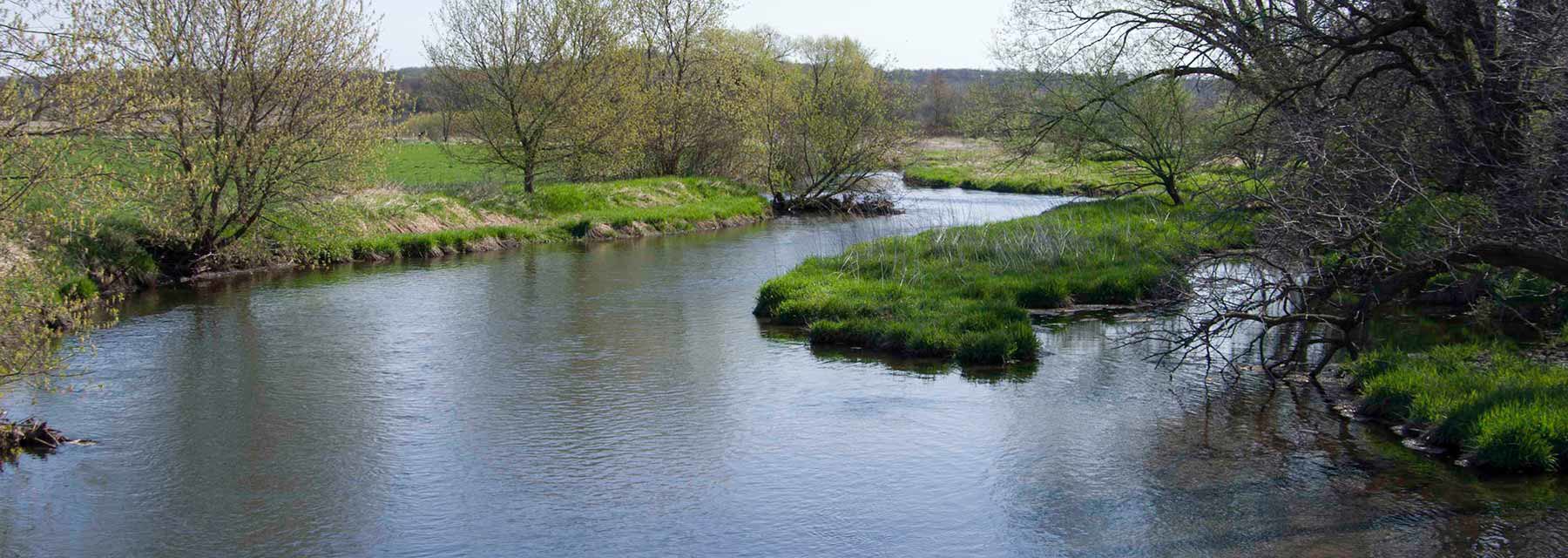
A few dozen miles southeast of London lie peaceful valleys of the Hampshire countryside, where legendary rivers such as the Avon, the Test, and the Itchen flow to the sea through wooded meadows of magnificent beauty. Fed by mineral rich springs of a “chalk” (white limestone) aquifer, the rivers support immense populations of insects and trout. The area is steeped in tradition, and some of angling’s finest literature sprang from its gin clear waters.
George Edward Mackenzie Skues, one of history’s most insightful and entertaining angler-authors, boards the two o’clock train in London bound for the cathedral city of Winchester in central Hampshire. Worldly concerns of his busy law practice at James Powell solicitors fade away as Skues prepares for the evening rise at Abbott’s Barton on the River Itchen. He settles into a window seat on the sunny side of the train and pulls out his portable fly-tying kit. He glances out the window and discovers a handsome traveling companion. A splendid blue-winged olive spinner sits beside him on the lower ledge of the carriage window. Skues affixes a hook to his hand vise and carefully blends seal’s fur to match the spinner’s reddish-brown color. He selects hot orange thread, which glows faintly through the seal dubbing and gives a fiery translucence much like that of his traveling companion. That evening, Skues’ handiwork fools several large and wary trout. He later christens the fly the “Rusty Spinner” in his 1921 book The Way of a Trout With a Fly.
Skues’ fly was the very first to be named “Rusty Spinner”, but similar flies had been tied since the origins of angling. Indeed, the first English-language angling book (The Book of St. Albans, 1496) describes twelve artificial flies, one of which (the “Ruddy Fly”) is believed by angling scholars to be a reddish brown mayfly spinner. Spinners are sexually mature mayfly adults (imagos) that develop from recently hatched sexually immature mayfly duns (subimagos) following a streamside molt. Spinners of a surprisingly large proportion of mayfly species are reddish-brown in color, very similar to Skues’ rusty-red seal’s fur. Spinner imitations through the centuries bear many charming names, such as Mahogany Spinner, Sherry Spinner, Houghton Ruby, Jenny Spinner, Lunn’s Particular, Claret Spinner, Spent Gnat, and many others.
The wings of all mayfly spinners are glassy and clear (“hyaline”), and their imitation has plagued fly tyers for centuries. Author Francis Francis described the challenge of imitating spinner wings in his 1867 book, A Book on Angling:
“The wings – ah! those wings! What shall we do to imitate their clear, delicate, watery transparency?”
History’s quest for imitative spinner wings included all sorts of peculiar materials, such as trimmed fish scales, shavings of whale bone, the clear membranous stems of flight feathers, and many others. Prior to the late 1800s and development of dry-fly fishing, spinner imitations were primarily soft-hackled wet flies. Wings (if present) were tied either upright and divided or sloping backwards. George Selwyn Marryat was the first to tie spinner wings in the now standard flat position outstretched horizontally on the water’s surface. Marryat’s wings were tips of hackle feathers, but tyers today typically use sparkly synthetics or perhaps stiff hackle feather barbs.
America’s Vince Marinaro contributed an elegant and effective solution to imitating spinner wings. He tied spinner patterns with a thick collar of white rooster hackle at the thorax and then trimmed fibers from the top and bottom, leaving only the hackle barbs pointed laterally (A Modern Dry Fly Code, 1950). The sparseness of Marinaro’s wings imitates the glassy clearness of spinner wings, and the stiff hackle gives excellent floatation. Many spinners land on the surface with upright wings, after which they droop slowly down to the surface. Marinaro’s clever design can imitate fully or partially spent wings depending on which of the hackle fibers are trimmed. Spinner imitations usually fish equally well just under the surface as they do atop the surface.
Look for spinners in glassy smooth waters especially in the evenings and early mornings. With a good spinner imitation you will enjoy dry-fly fishing right through to the very end of a mayfly hatch.
Copyright 2026, Rusty Dunn
Rusty Spinner (Marinaro Style)

This Rusty Spinner recipe is that of G.E.M. Skues, but the wings are affixed as did Vince Marinaro. Skues wrapped a collar of rooster hackle, but he did not trim the fibers on the top and bottom.
|
Hook:
|
Dry fly, size to match the natural
|
|
Thread:
|
Hot orange silk
|
|
Tail:
|
A bundle of honey dun hackle fibers, split
|
|
Body:
|
Dry-fly dubbing, a rusty reddish brown color to match the naturals
|
|
Rib:
|
Fine gold wire
|
|
Wings:
|
White, cream, pale watery dun or similar light colored rooster hackle; trimmed top and bottom, leaving only lateral fibers
|


Rusty Spinner (Marinaro-style)
Leave a Comment
Last Updated: May 4, 2026 by Drew Kasel
by Rusty Dunn
A few dozen miles southeast of London lie peaceful valleys of the Hampshire countryside, where legendary rivers such as the Avon, the Test, and the Itchen flow to the sea through wooded meadows of magnificent beauty. Fed by mineral rich springs of a “chalk” (white limestone) aquifer, the rivers support immense populations of insects and trout. The area is steeped in tradition, and some of angling’s finest literature sprang from its gin clear waters.
George Edward Mackenzie Skues, one of history’s most insightful and entertaining angler-authors, boards the two o’clock train in London bound for the cathedral city of Winchester in central Hampshire. Worldly concerns of his busy law practice at James Powell solicitors fade away as Skues prepares for the evening rise at Abbott’s Barton on the River Itchen. He settles into a window seat on the sunny side of the train and pulls out his portable fly-tying kit. He glances out the window and discovers a handsome traveling companion. A splendid blue-winged olive spinner sits beside him on the lower ledge of the carriage window. Skues affixes a hook to his hand vise and carefully blends seal’s fur to match the spinner’s reddish-brown color. He selects hot orange thread, which glows faintly through the seal dubbing and gives a fiery translucence much like that of his traveling companion. That evening, Skues’ handiwork fools several large and wary trout. He later christens the fly the “Rusty Spinner” in his 1921 book The Way of a Trout With a Fly.
Skues’ fly was the very first to be named “Rusty Spinner”, but similar flies had been tied since the origins of angling. Indeed, the first English-language angling book (The Book of St. Albans, 1496) describes twelve artificial flies, one of which (the “Ruddy Fly”) is believed by angling scholars to be a reddish brown mayfly spinner. Spinners are sexually mature mayfly adults (imagos) that develop from recently hatched sexually immature mayfly duns (subimagos) following a streamside molt. Spinners of a surprisingly large proportion of mayfly species are reddish-brown in color, very similar to Skues’ rusty-red seal’s fur. Spinner imitations through the centuries bear many charming names, such as Mahogany Spinner, Sherry Spinner, Houghton Ruby, Jenny Spinner, Lunn’s Particular, Claret Spinner, Spent Gnat, and many others.
The wings of all mayfly spinners are glassy and clear (“hyaline”), and their imitation has plagued fly tyers for centuries. Author Francis Francis described the challenge of imitating spinner wings in his 1867 book, A Book on Angling:
“The wings – ah! those wings! What shall we do to imitate their clear, delicate, watery transparency?”
History’s quest for imitative spinner wings included all sorts of peculiar materials, such as trimmed fish scales, shavings of whale bone, the clear membranous stems of flight feathers, and many others. Prior to the late 1800s and development of dry-fly fishing, spinner imitations were primarily soft-hackled wet flies. Wings (if present) were tied either upright and divided or sloping backwards. George Selwyn Marryat was the first to tie spinner wings in the now standard flat position outstretched horizontally on the water’s surface. Marryat’s wings were tips of hackle feathers, but tyers today typically use sparkly synthetics or perhaps stiff hackle feather barbs.
America’s Vince Marinaro contributed an elegant and effective solution to imitating spinner wings. He tied spinner patterns with a thick collar of white rooster hackle at the thorax and then trimmed fibers from the top and bottom, leaving only the hackle barbs pointed laterally (A Modern Dry Fly Code, 1950). The sparseness of Marinaro’s wings imitates the glassy clearness of spinner wings, and the stiff hackle gives excellent floatation. Many spinners land on the surface with upright wings, after which they droop slowly down to the surface. Marinaro’s clever design can imitate fully or partially spent wings depending on which of the hackle fibers are trimmed. Spinner imitations usually fish equally well just under the surface as they do atop the surface.
Look for spinners in glassy smooth waters especially in the evenings and early mornings. With a good spinner imitation you will enjoy dry-fly fishing right through to the very end of a mayfly hatch.
Copyright 2026, Rusty Dunn
Rusty Spinner (Marinaro Style)
This Rusty Spinner recipe is that of G.E.M. Skues, but the wings are affixed as did Vince Marinaro. Skues wrapped a collar of rooster hackle, but he did not trim the fibers on the top and bottom.
Hook:
Dry fly, size to match the natural
Thread:
Hot orange silk
Tail:
A bundle of honey dun hackle fibers, split
Body:
Dry-fly dubbing, a rusty reddish brown color to match the naturals
Rib:
Fine gold wire
Wings:
White, cream, pale watery dun or similar light colored rooster hackle; trimmed top and bottom, leaving only lateral fibers
Share this:
Category: Fly Tying, Rusty Dunn Fountains of Youth
Recent Posts
Categories
Partners